An ADA-accessible unit is a different animal from a standard portable toilet, and the difference is mostly floor space and ground conditions. The 2010 ADA Standards call for an accessible route to the fixture and a…
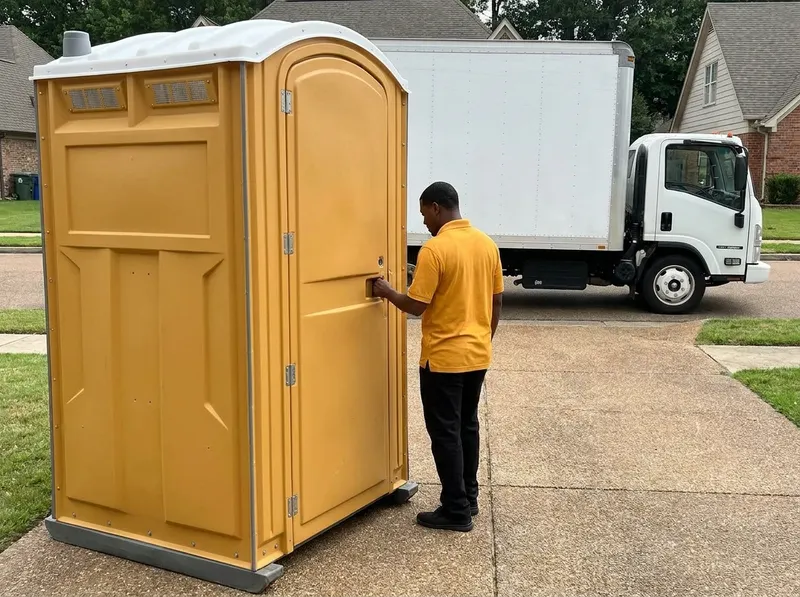
An ADA-accessible unit is a different animal from a standard portable toilet, and the difference is mostly floor space and ground conditions. The 2010 ADA Standards call for an accessible route to the fixture and a 60-inch turning space inside, which is why these units are far wider than a construction-style unit — plan on a footprint around five feet square plus swing room for the door. That footprint drives the whole placement conversation. Firm, level ground with a route a wheelchair can actually roll is the requirement that matters most, and it's the one people forget until the truck is on site.
Memphis geography decides this fast. Paved festival ground like Tom Lee Park on the riverfront or the walkways around Harbor Town on Mud Island is the easy case — hard surface, level, short push from the tent or stage. Grass-and-slope venues take more planning: reunions at Shelby Farms Park, weddings at Memphis Botanic Garden, and shows at Agricenter International often need the ADA unit staged near a paved drive or parking edge rather than out in the field, because a soft, sloped approach after a Memphis afternoon thunderstorm is not an accessible route. Church anniversaries and homecomings in Whitehaven and Orange Mound usually work best with the unit on the parking lot apron close to the fellowship hall door. On tailgate and lot-based events near Liberty Bowl Memorial Stadium, asphalt makes placement simple but crowd flow doesn't — keep the ADA unit off the main walking lane so the door has room to swing fully open.
Decide between an ADA unit and standard units by who has to use it, not by unit count alone. If your event is open to the public, hosting elders, or serving anyone using a walker, cane, or wheelchair, an accessible unit belongs in the plan and standard units handle volume around it. An ADA unit is not a high-throughput unit — the extra space means one person at a time and slower turnover, so using a single accessible unit as your only restroom for a 150-person cookout leaves a line. The practical mix for a Memphis event: standard units sized to your headcount and event length, plus at least one ADA unit placed on the best hard surface available. On construction sites, the trade-off is placement discipline. Contractors in Binghampton, Berclair, Frayser, Hickory Hill, and Raleigh often run gravel lay-down yards where an accessible unit needs a plywood or crushed-stone pad to stay level and reachable as the site changes.
Access for our truck is the other half of the job, and we'd rather talk about it before the delivery date than after. Tight residential streets and alleys in Cooper-Young and Vollintine-Evergreen, low tree canopy on older Midtown blocks, gated warehouse yards, and event grounds with a single service gate all affect where we can reasonably set and later reach the unit for pumping. Tell us the gate width, any overhead limits, and whether the route is gravel, grass, or pavement. If the only workable spot is a long carry from where the truck can park, we'll say so, quote the extra work up front, and put it in the confirmation — so the number you approve is the number you pay. Pricing here is a ballpark drawn from the Memphis market; the exact figure gets confirmed on a free on-site look or after a short call about access, dates, and service frequency across Shelby County.
Every job gets a firm, written price after a free on-site visit.
Tell us about your ada-accessible portable restroom rental job in Memphis and we'll send a clear, written quote — usually the same day.
 SmartNation Restroom Services