Service day follows a fixed order so nothing gets skipped: pump the tank first, wash down the interior surfaces, recharge water and deodorizer, then restock paper and sanitizer and test the latch and door spring before…
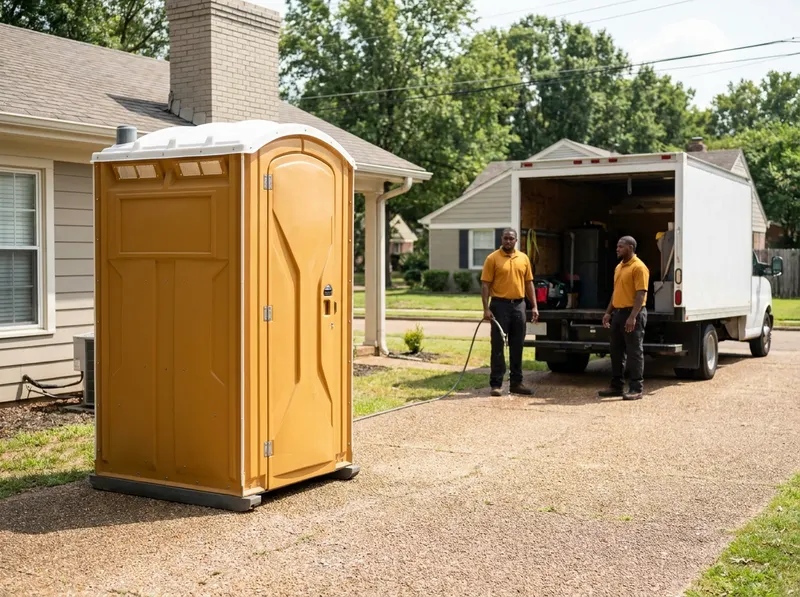
Service day follows a fixed order so nothing gets skipped: pump the tank first, wash down the interior surfaces, recharge water and deodorizer, then restock paper and sanitizer and test the latch and door spring before the driver leaves. Damage, missing paper holders, or a unit that's been moved by the crew gets reported rather than ignored. That last part matters more than most rental quotes admit — a skipped pump-out on a hot Memphis week is what turns a clean unit into the thing a superintendent gets complaints about.
Weekly fits when one unit is covering roughly up to ten workers on a standard workweek, or when a homeowner's renovation runs a month or more. Twice-weekly is the better call above that headcount, on high-traffic pours and demo phases, and through July and August, when Memphis heat and river humidity push odor and usage harder than the calendar alone suggests. Single-service, one-off visits make more sense for a weekend event than a standing route — a Saturday festival or reunion needs a mid-run service tied to the event, not a Tuesday route stop. The trade-off is simple: weekly costs less per visit and locks in your slot, while on-call visits cost more per trip and depend on truck availability that day.
Route days are grouped geographically to keep trucks tight and arrival windows honest. Midtown clusters — Cooper-Young, Vollintine-Evergreen and Binghampton — get grouped separately from south and southeast runs through Whitehaven, Orange Mound and Hickory Hill, and from north-side stops in Frayser, Raleigh and Berclair. Access details change what the driver needs from you: alley placements behind Cooper-Young shotgun houses need cars off the alley that morning, gravel yards around Frayser warehouses need a solid pad the truck can back to, and Harbor Town on Mud Island needs gate or guest access instructions on file plus a placement that doesn't put a service truck across a narrow street. Long-run sites out toward Shelby Farms Park and Agricenter International get placed with hose reach in mind so the unit doesn't have to be dragged on service day.
Here's what's in the number and what isn't, so the invoice doesn't surprise you. The quoted rate covers the unit, the weekly visit, pumping and haul-off, and the paper and sanitizer restock. Extras are the things that are genuinely extra: an added trip between route days, relocating a unit to a new spot on the same site, blockages caused by trash or construction debris dropped in the tank, and a wasted trip when a gate is locked or a vehicle is parked against the door. If a driver can't reach your unit, you get a call — not a silent skip. Every figure here is a ballpark based on unit count, crew size and access; the exact price is confirmed on a free on
Tell us about your weekly servicing & restocking route job in Memphis and we'll send a clear, written quote — usually the same day.
 SmartNation Restroom Services