A holding tank is the right call when you have a fixture that flushes or drains and nowhere for the water to go. That covers restroom trailers at a Harbor Town wedding, a plumbed hand-wash station for a food vendor row…
A holding tank is the right call when you have a fixture that flushes or drains and nowhere for the water to go. That covers restroom trailers at a Harbor Town wedding, a plumbed hand-wash station for a food vendor row at Agricenter International, and the common Memphis renovation problem — a Cooper-Young or Vollintine-Evergreen bungalow where the only bathroom is torn out for three weeks but the homeowner still wants a real sink and toilet instead of a unit in the driveway. It also covers job trailers in Frayser and Raleigh warehouse yards that sit hundreds of feet from any sewer tap. The alternative — a standard portable restroom — needs no tank, no hoses, and no pump truck access, so it is almost always the cheaper choice when the crew or the guests just need a toilet. Pick the tank when the fixtures are already there or the event calls for a trailer; pick standard units when what you really need is capacity on the ground.
Sizing comes down to gallons per person, not guesswork. A restroom trailer used by a wedding of 150 for one evening puts out far less than a 20-person framing crew using a plumbed job trailer five days a week, and the tank has to be big enough that we are not chasing it. We size the tank to your headcount and the number of days between visits, then set the pump-out schedule to empty it at roughly three-quarters full — never at the overflow line. In July and August, Memphis heat turns a half-full tank sour fast, so tighter intervals are normal for summer events at Tom Lee Park or a family reunion pavilion near Shelby Farms Park. In a January cold snap, exposed hose lines and short runs matter more than volume, and we place accordingly.
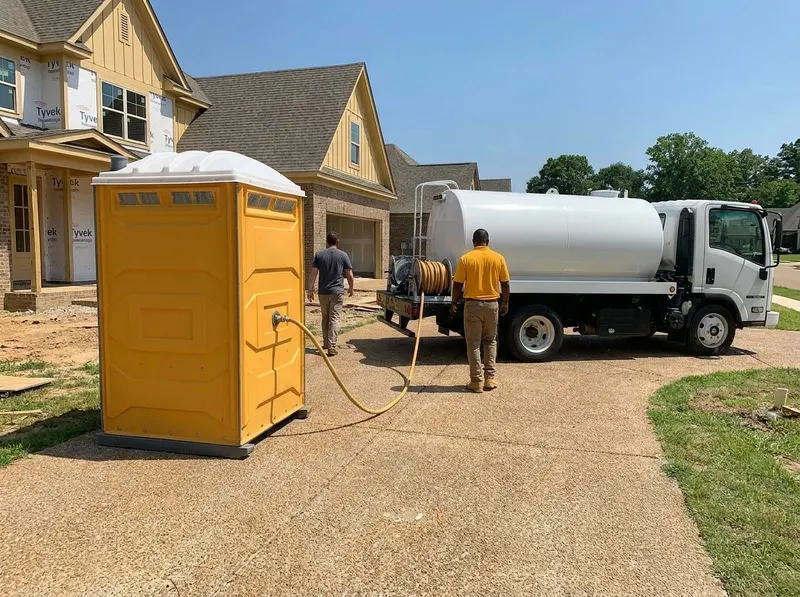
Access is the part that quietly kills schedules, so read it before you call. Our pump truck works off a hose reel, which means the tank needs to sit within reasonable hose reach of a spot the truck can actually park and stay parked. That is easy in a Whitehaven church lot or a Hickory Hill commercial yard. It is genuinely tight in the narrow rear alleys behind Binghampton and Orange Mound houses, on Mud Island's short curbside streets, and on Berclair blocks where cars line both sides on a weeknight. Tell us about gates, alley width, low limbs, soft ground, and parking restrictions when you book, and we will plan the placement instead of discovering the problem with a loaded truck.
What we do on each service visit is fixed and plain: pull the tank down to empty, check the hose connection and fittings for leaks, deodorize, note the level for the next interval, and leave the site the way we found it. You get a confirmed day and arrival window before the truck rolls, so nobody on your crew or your event staff is standing around guessing. If the tank is filling faster than expected — extra crew added, an event ran longer, a second trailer went in — call and we adjust the schedule rather than letting it back up into your fixtures. That is the whole point of paying for a tank instead of a bucket: predictable capacity, and a service day you can put on the calendar.
Every job gets a firm, written price after a free on-site visit.
Tell us about your holding tank rental & pump-out job in Memphis and we'll send a clear, written quote — usually the same day.
 SmartNation Restroom Services