Jobsite rental and event rental are priced and serviced differently, and picking the wrong one costs money. A construction rental is built around a four-week cycle with **weekly service** included, because a crew of…
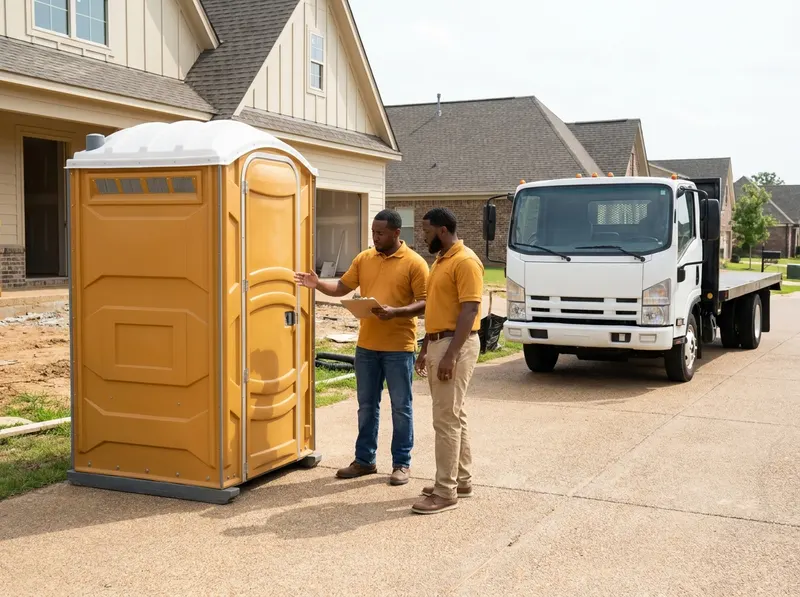
Jobsite rental and event rental are priced and serviced differently, and picking the wrong one costs money. A construction rental is built around a four-week cycle with weekly service included, because a crew of eight using one unit five days a week fills a tank fast. Event units are dropped clean, used hard for one day, and hauled off. If your build runs three weeks or longer, the monthly jobsite cycle is almost always the cheaper path. If you only need coverage for a weekend punch-out or a single slab pour, ask about a short drop — but know that the $250 minimum applies either way, so a one-week rental lands close to what a full month costs. That's the trade-off, said plainly.
Access decides more Memphis jobsite placements than anything else. Infill builds in Cooper-Young and Vollintine-Evergreen come with narrow streets, parked cars, alley approaches, and low oak limbs, so the unit usually sits at the front corner of the lot near the drive where the pump truck can get within hose reach. Harbor Town on Mud Island runs one-way loops and tight setbacks, so we place with sightlines in mind and face the door away from neighboring windows. Commercial pads in Hickory Hill, warehouse yards off the Raleigh and Frayser industrial roads, and rehab lots in Orange Mound, Binghampton, Berclair, and Whitehaven are easier on truck access but rougher underfoot — Memphis clay turns to grease after a spring rain, so we set units on gravel, plywood, or the concrete apron rather than soft ground that will rut and tilt. Tell us the gate code, the lockbox, and whether a container or excavator is due to move into that spot next week, and we'll place it once instead of twice.
Crew count sets unit count. OSHA's construction sanitation rule calls for one facility for 20 or fewer workers, and one toilet seat plus one urinal per 40 workers once you pass 20 — a useful yardstick when a Shelby County inspector walks the site. Real usage matters too: a framing crew in August Memphis heat, drinking water all day, will use a unit harder than the same crew in February, and a second weekly service visit is often the fix rather than a second unit. Winter brings the opposite issue — cold snaps can stiffen a unit's contents and its latch, so units stay treated and we look at them on every visit.
What's in the quote is stated before delivery, not after. Delivery, pickup, the agreed weekly service visits, and standard paper restock are quoted as one number. Extras get named up front: additional pump-outs beyond the schedule, moving a unit
Tell us about your construction site portable toilet rental job in Memphis and we'll send a clear, written quote — usually the same day.
 SmartNation Restroom Services